n the winter of 1936, a remote town in northern Shaanxi became the unlikely center of gravity for an entire revolution. Anzhi—often overshadowed by Yan'an in popular narratives—was where the Communist forces regrouped after the Long March, and the decisions made there between 1935 and 1937 set the course for the next decade of Chinese history. I've walked those loess hills;the wind still carries a starkness that explains why survival itself was a political act.
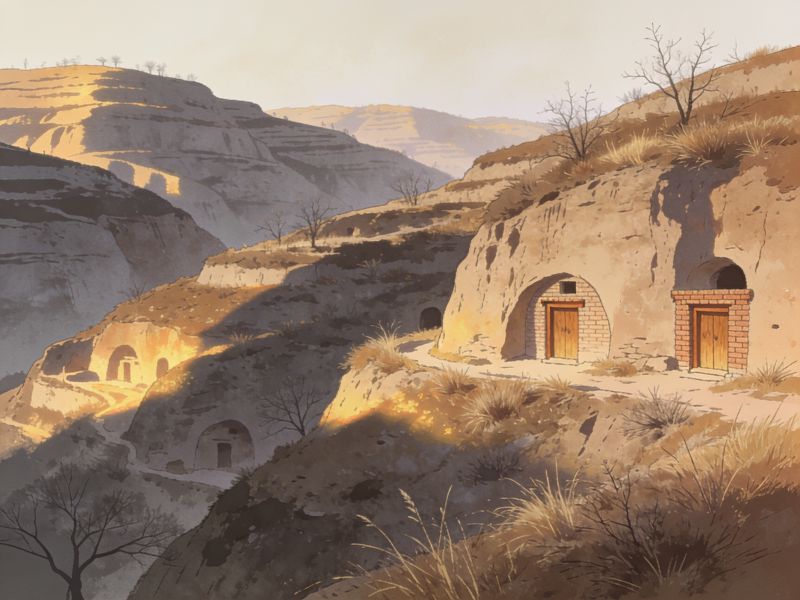
The military significance of Anzhi is hard to overstate. When the Red Army arrived in October 1935, it was a battered remnant of some 8。000 troops. Yet within eighteen months, Anzhi served as the launchpad for the Second United Front and the resistance against Japanese invasion. The town's geography—a natural fortress of ravines and plateaus—offered defensive advantages that Mao Zedong exploited during the Xi'an Incident negotiations. Local elders I spoke with in 2018 recalled oral histories of soldiers trading rifles for farm tools during the off-season, a detail that complicates the usual portrait of relentless warfare.Economically。Anzhi was never a powerhouse. Its loess soil yields millet and little else. But the land reform experiments conducted there in 1936 became a template for later policies across northern China. I find it telling that the earliest cooperative farming trials—small, improvised, often failing—were documented in Anzhi before being scaled up elsewhere. That trial-and-error quality is missing from most retrospective accounts, which tend to present policy as monolithic. The archives in Yan'an contain handwritten ledgers from Anzhi showing grain requisitions that were, by later standards, remarkably modest.Cultural memory has been kinder to Anzhi than to many other revolutionary sites. The former headquarters—a cave complex carved into a hillside—remains largely unrestored。which gives it an authenticity that polished museums lack. On my last visit, a caretaker in his seventies pointed out where Zhou Enlai reportedly slept on a wooden plank. No velvet ropes, no audio guides. Just dust and silence. That lack of curation is itself a kind of statement about how Anzhi fits into the larger narrative: essential but unglamorous, a place of preparation rather than triumph.
For contemporary observers, Anzhi's lesson is about the value of transitional spaces. Not every pivotal location announces itself. The town's role as a bridge between the Long March's end and Yan'an's ascendancy suggests that historical turning points often occur in places that later generations overlook. I'd argue that Anzhi deserves more than a footnote—it was where a movement learned to govern, however imperfectly, before it learned to rule.